

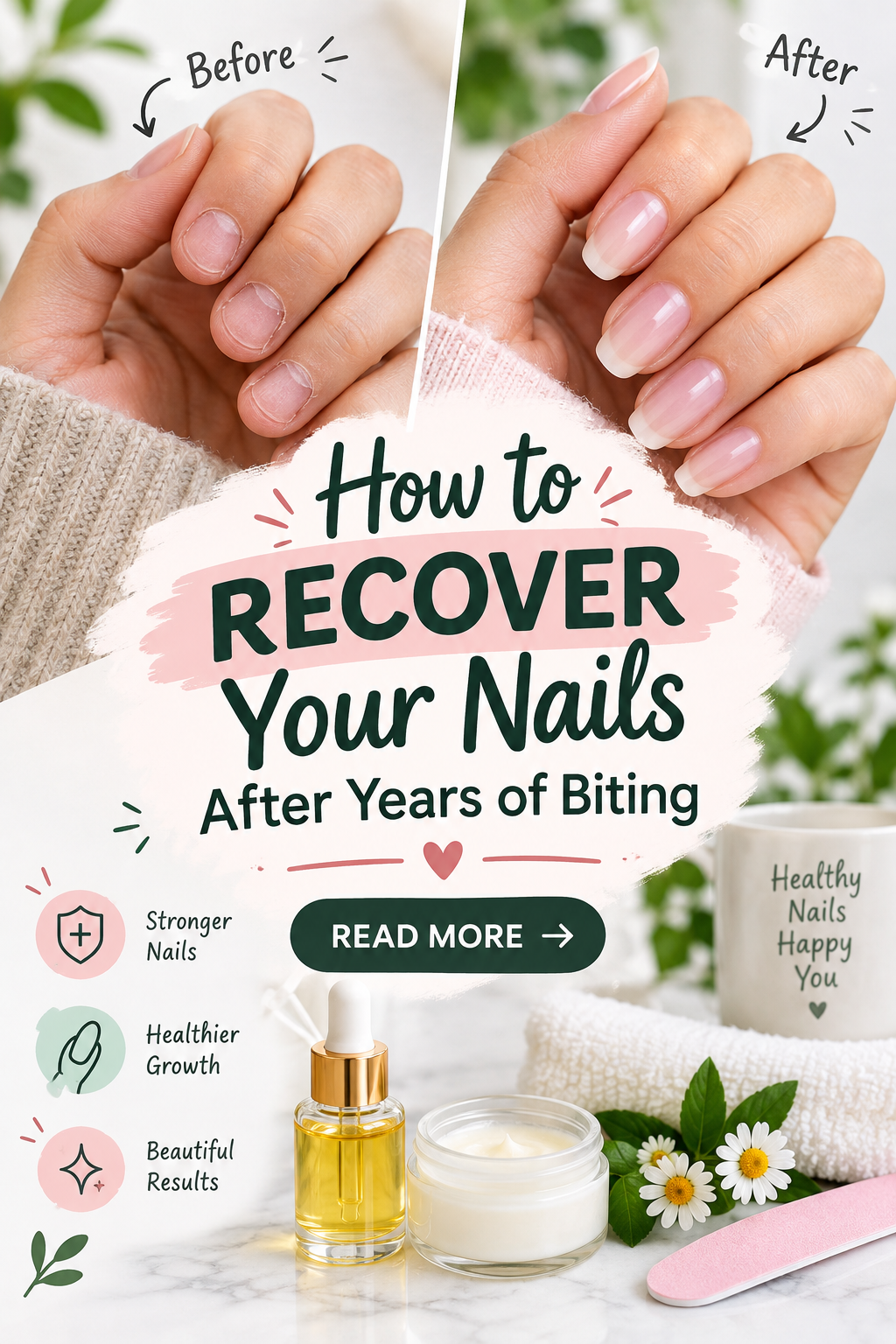
If you have bitten your nails for years, you may feel that your nails will never look healthy again. The good news is that nails can improve with time, patience, and proper care.
Years of nail biting can leave nails short, weak, uneven, and sensitive. The skin around the nails may also become dry or damaged. When you stop biting, your nails get a chance to grow and repair themselves.
Nail biting recovery does not happen overnight. It is a gradual process. With a simple nail care routine, you can support healthy nail growth and protect your nails while they recover.
In this guide, you will learn how to recover your nails after years of biting, what to expect during the recovery process, and how to keep your nails healthy as they grow.
What Happens to Your Nails When You Bite Them?
Nail biting can cause more than short nails. Repeated biting can damage the nail and the skin around it.
When you bite your nails often, you may remove parts of the nail plate. The skin around the nail can also become sore, dry, or cracked.
Some people also bite the cuticles or skin around their nails. This can make the area look rough and irritated.
Over time, your nails may become uneven. You may notice that some nails grow differently from others.
The good news is that stopping the habit gives your nails a chance to grow normally again.
Can Nails Recover After Years of Biting?
Yes, nails can improve after years of nail biting.
Your nails naturally grow from an area called the nail matrix, which is located under the skin near the base of the nail. As new nail cells develop, the nail slowly grows forward.
If the nail matrix has not suffered permanent damage, stopping nail biting can allow your nails to grow normally.
However, recovery time is different for everyone. Your age, general health, nail care habits, and how long you have bitten your nails can all affect the process.
The most important step is to stop damaging the nail repeatedly.
How Long Does Nail Biting Recovery Take?
Nails grow slowly, so you need to give them time.
Fingernails generally take several months to grow out completely. If you have bitten your nails for many years, the first few weeks may seem slow.
During the early stage, you may notice small changes. Your nails may start becoming slightly longer, and the skin around them may look healthier.
After several weeks and months, the difference can become much easier to see.
Think of nail recovery as a journey rather than a quick transformation.
Step 1: Stop Biting Your Nails
The first and most important step is to stop biting.
This may sound simple, but breaking a long-term habit can be difficult. Many people bite their nails without realising they are doing it.
Try to notice when you usually bite your nails.
You may bite them when you are:
Stressed
Nervous
Bored
Watching TV
Working at a computer
Studying
Thinking deeply
Once you know your triggers, you can find another activity to replace nail biting.
For example, you can keep a small stress ball nearby or use another safe hand activity when you feel the urge to bite.
Step 2: Keep Your Nails Short at First
During the early stages of recovery, keeping your nails short can help.
Long, uneven edges can tempt you to bite or pick at your nails. Carefully trim your nails and use a nail file to smooth rough edges.
Do not cut your nails extremely short.
Leave a small amount of free edge so you do not accidentally hurt the skin underneath.
As your nails become stronger and you become more comfortable without biting, you can gradually allow them to grow longer.
Step 3: Use a Gentle Nail File
A nail file can help smooth rough or sharp edges.
Choose a gentle file and move it carefully across the nail. Avoid aggressive back-and-forth filing.
If your nails are very thin or weak, be gentle. The goal is to shape the nail without causing additional damage.
Smooth nails are also less likely to catch on clothing, hair, or other objects.
Step 4: Moisturise Your Nails and Cuticles
Moisture is an important part of nail care.
After years of biting, the skin around your nails may feel dry. Applying a hand cream or cuticle moisturiser can help keep the surrounding skin soft.
You can apply moisturiser after washing your hands and before going to bed.
Pay attention to the cuticles and the skin around each nail.
Avoid cutting your cuticles aggressively. The cuticle helps protect the area where the nail begins to grow.
Step 5: Protect Your Nails From Water and Chemicals
Frequent exposure to water and harsh chemicals can make nails feel dry and weak.
If you regularly wash dishes or use cleaning products, consider wearing protective gloves.
Try to avoid keeping your hands in water for long periods when possible.
When using household cleaning products, follow the product instructions and use appropriate protection.
Simple habits like these can help protect your recovering nails.
Step 6: Avoid Picking at Your Nails
Stopping nail biting is a big step, but picking can also damage your nails.
You may notice a small piece of loose skin or a rough edge and feel tempted to pull it.
Instead, carefully trim the loose piece with clean nail tools.
Do not pull or tear the skin because this can cause unnecessary irritation.
Keeping your nail tools clean is also important.
Step 7: Give Your Nails Time to Grow
One of the biggest mistakes people make during nail biting recovery is expecting instant results.
Your nails need time to grow.
You may look at your nails every day and feel that nothing is changing. Instead, take a photo every few weeks.
Comparing photos can make your progress easier to notice.
A simple before-and-after photo can also motivate you to continue.
Nail Biting Recovery Before and After
A nail-biting before-and-after transformation can look very different over time.
At the beginning, nails may be extremely short with uneven edges. The surrounding skin may also look dry or irritated.
After you stop biting, the nails can slowly grow beyond the fingertips. With regular care, the surrounding skin may also look smoother and healthier.
Remember that everyone’s nails are different.
Do not compare your recovery to someone else’s transformation. Your nails may grow at a different speed.
Focus on your own progress.
What to Expect During the First Few Weeks
The first few weeks are often about breaking the habit.
Your nails may still look short, but you may notice that they are no longer becoming shorter.
This is already progress.
You may also notice more white nail edge as the nail grows.
During this stage, try to protect your nails and avoid using them as tools.
Do not use your nails to open cans, scratch hard surfaces, or remove stickers.
What to Expect After One Month
After several weeks, your nails may begin to look noticeably longer.
The nail edges may become easier to shape, and you may find it easier to maintain them.
You may still have weak or uneven areas. That is normal during recovery.
Continue moisturising your hands and nails and keep your nail routine simple.
Consistency is more important than using many different products.
What to Expect After Several Months
With continued care, your nails can look much healthier after several months.
You may have enough length to try simple nail designs or a natural manicure.
Your nails may also feel stronger than they did during the early stages of recovery.
Keep in mind that a complete nail growth cycle takes time. Some damaged areas may need to grow out before you see your best results.
Can Nail Biting Damage the Nail Bed?
Long-term nail biting can sometimes affect the appearance of the nail and surrounding skin.
The nail bed is the skin underneath the nail plate. Repeated trauma can change how the nail looks.
However, not every person who bites their nails will experience permanent damage.
If you notice persistent changes, severe pain, swelling, bleeding, pus, or a nail that doesn’t grow normally, it is a good idea to see a healthcare professional or dermatologist.
Simple Nail Care Routine for Recovery
You do not need a complicated routine to care for recovering nails.
Try this simple routine:
Morning:
Wash your hands gently.
Apply hand moisturiser if your skin feels dry.
Check your nails for rough edges.
During the day:
Avoid biting and picking.
Protect your hands when using cleaning products.
Avoid using your nails as tools.
At night:
Wash your hands.
Apply a moisturiser or cuticle cream.
Gently massage the skin around your nails.
Check your nails for any rough edges.
A simple routine is easier to follow than a complicated one.
You do not need expensive supplements just because you are recovering from nail biting. If you think you have a nutritional deficiency, speak with a healthcare professional before taking supplements.
Common Nail Biting Recovery Mistakes
Some habits can make recovery harder.
Growing Your Nails Too Fast
Trying to grow very long nails immediately can make them easier to break.
Start slowly and focus on healthy growth.
Using Too Many Products
You do not need a large collection of nail products.
A gentle file, moisturiser, and basic nail care tools may be enough for a simple routine.
Picking Instead of Biting
Replacing biting with picking does not give your nails a chance to recover.
Try to notice this behaviour and stop before you damage the nail.
Giving Up Too Early
Nail growth takes time.
If your nails do not look completely different after a few weeks, do not assume your routine is failing.
Keep going.
How to Stop Yourself From Biting Again
Recovery is not only about growing your nails. It is also about changing the habit.
Try these simple ideas:
Keep Your Nails Neat
Smooth, clean nails may make you more aware of your progress.
Identify Your Triggers
Notice when you usually bite.
If stress is a trigger, try deep breathing or another calming activity.
Keep Your Hands Busy
Use a pen, stress ball, or another safe object when you feel the urge to bite.
Take Progress Photos
Take a photo every two or four weeks.
Seeing your progress can give you a reason to continue.
Celebrate Small Wins
You do not have to wait until your nails are perfect.
Going one day, one week, or one month without biting is progress.
When Should You See a Dermatologist?
Most minor nail problems can improve with time and gentle care.
However, you should consider professional advice if you notice:
Persistent nail pain
Significant swelling
Bleeding that does not stop
Pus or signs of infection
Severe nail discolouration
A nail that stops growing normally
Major changes that do not improve
A dermatologist can examine your nails and help identify the cause of ongoing problems.
Conclusion
Recovering your nails after years of biting takes patience, but small changes can add up.
The most important step is to stop biting and give your nails time to grow. Keep them clean, protect them from unnecessary damage, moisturise the surrounding skin, and avoid picking.
Do not expect perfect nails in a few days.
Your nail-biting recovery journey is personal. Some people may notice changes quickly, while others need more time.
Take photos, follow a simple routine, and focus on progress rather than perfection.
With consistent care and patience, you can allow your nails to grow longer, stronger, and healthier.
FAQ
How long does it take for nails to recover after years of biting?
Nail recovery can take several months because fingernails grow slowly. The exact time varies from person to person.
Can nails grow normally after years of nail biting?
Yes. If the nail matrix has not been permanently damaged, nails can often grow normally after the biting habit stops.
How can I make my nails grow after biting them?
Stop biting and picking, keep the nails protected, moisturise your hands and cuticles, maintain a balanced diet, and give your nails enough time to grow.
Should I keep my nails short during recovery?
Keeping nails at a manageable length can make them easier to protect during the early stages. You can let them grow longer gradually as they become easier to maintain.
Can nail biting cause permanent damage?
Repeated trauma can sometimes cause lasting changes, but not everyone who bites their nails develops permanent damage. Persistent or severe nail changes should be checked by a healthcare professional.
What should I do if I want to bite my nails again?
Try to identify what triggered the urge. Keep your hands busy, use a stress ball, and remind yourself of the progress you have already made.
Is nail biting recovery possible after many years?
Yes, recovery is possible for many people. The key is to stop repeated damage and give the nails time to grow naturally.
How can I protect my nails while they recover?
Keep them at a manageable length, smooth rough edges with a gentle file, moisturise regularly, avoid using nails as tools, and wear gloves when appropriate for household cleaning.